Chapter 2.3
The Solar System
The Sun
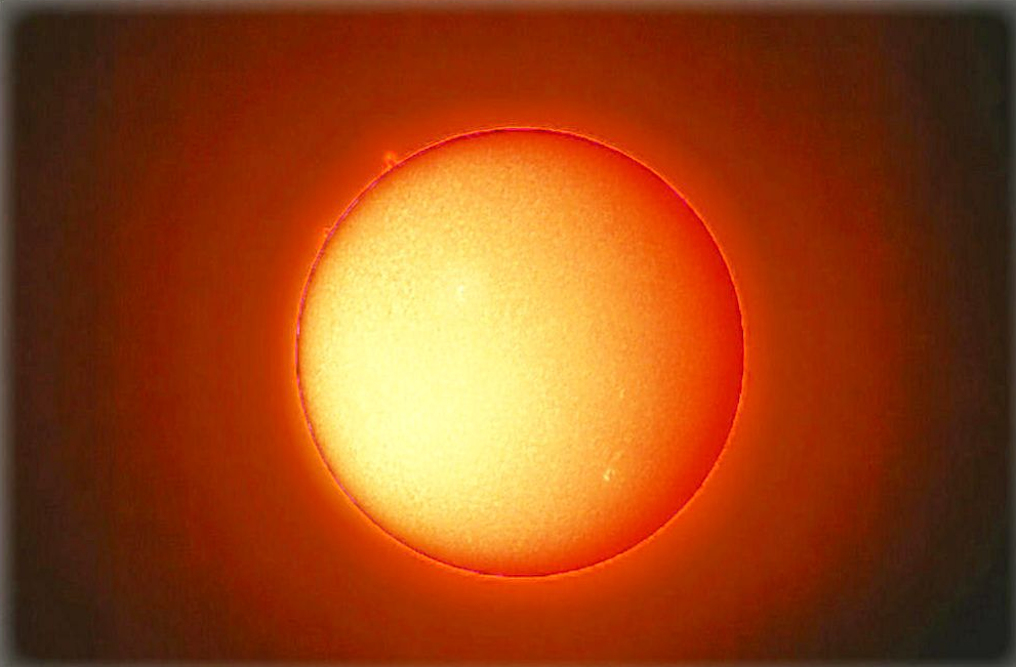
The sun is a yellow dwarf star, its brightness is too low to be a giant star. Dwarf stars do not end their
lives in a supernova explosion like giant stars which we can document with astrophotography.
Stars are classified according to their temperature from O (hottest and blue) to M (coolest and red).
Our Sun is a G2-type star, a yellow dwarf star with a temperature of 5.500°C
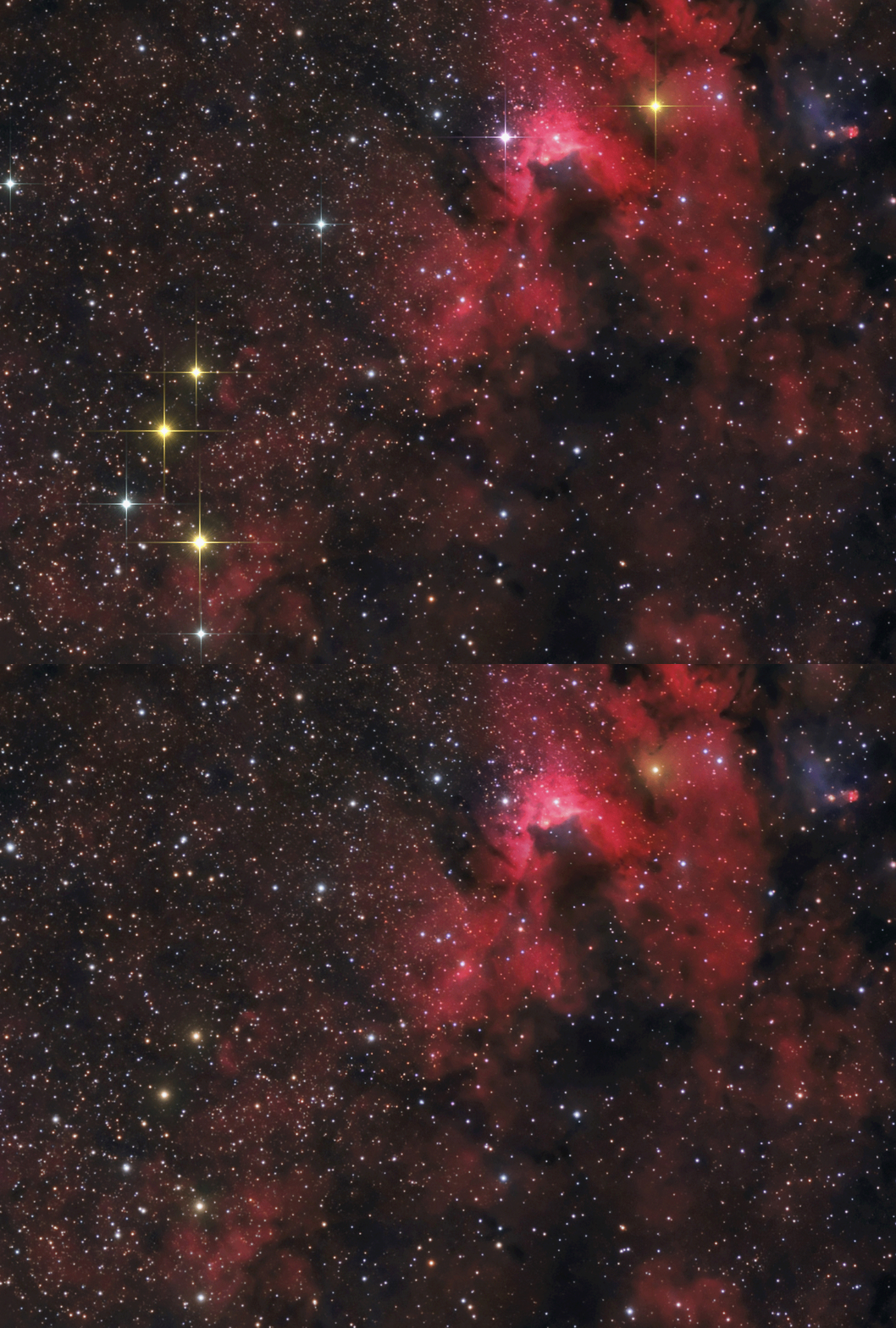
With your eyes in the night sky you cannot see the colors of stars because the sensitivity of the eyes is
reduced. But in reality every star has its own color dictated by its surface temperature. With long exposures
and correct color calibration of the image, colors can made visible.
|
|
The Moon
The Moon is Earth's only natural satellite. It orbits at an average distance of 384,400 km (238,900 mi),
about 30 times Earth's diameter. The Moon always presents the same side to Earth, because gravitational
pull has locked its rotation to the planet. This results in the lunar day of 29.5 Earth days matching
the lunar month. During this period the familiar phases of the moon take their turns.
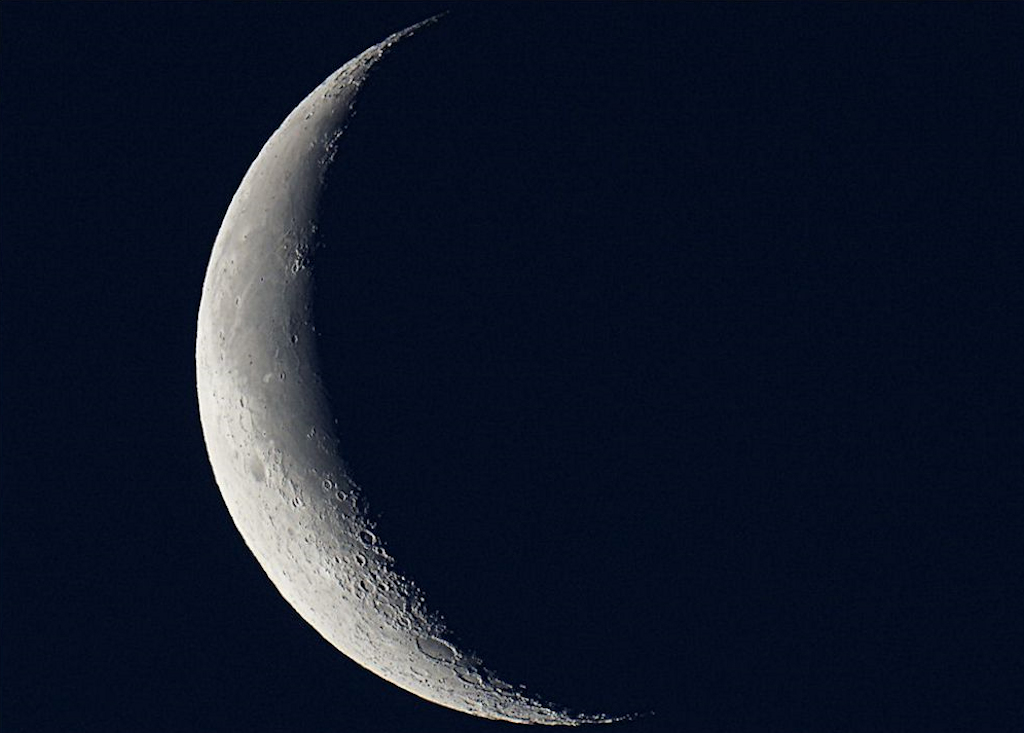
Because of the fact that we always see the same side of the moon, we never can take photos from the far side.
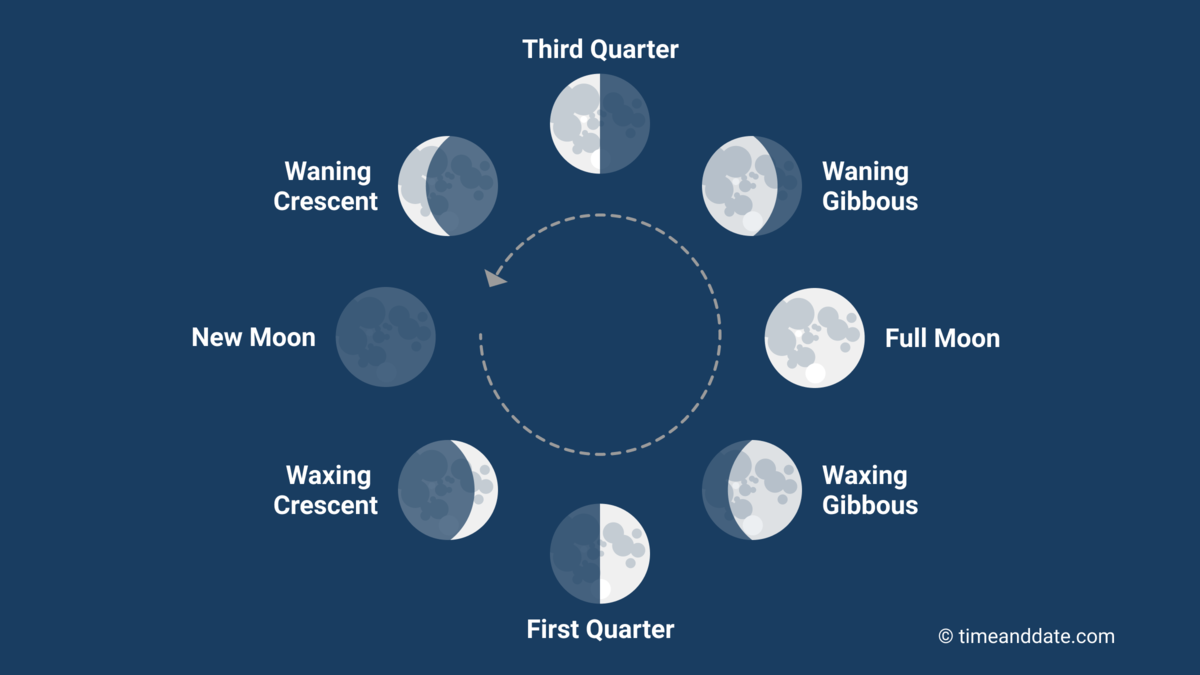
The Moon has eight phases in a lunar month: four primary and four intermediate phases.
|
|
Planets
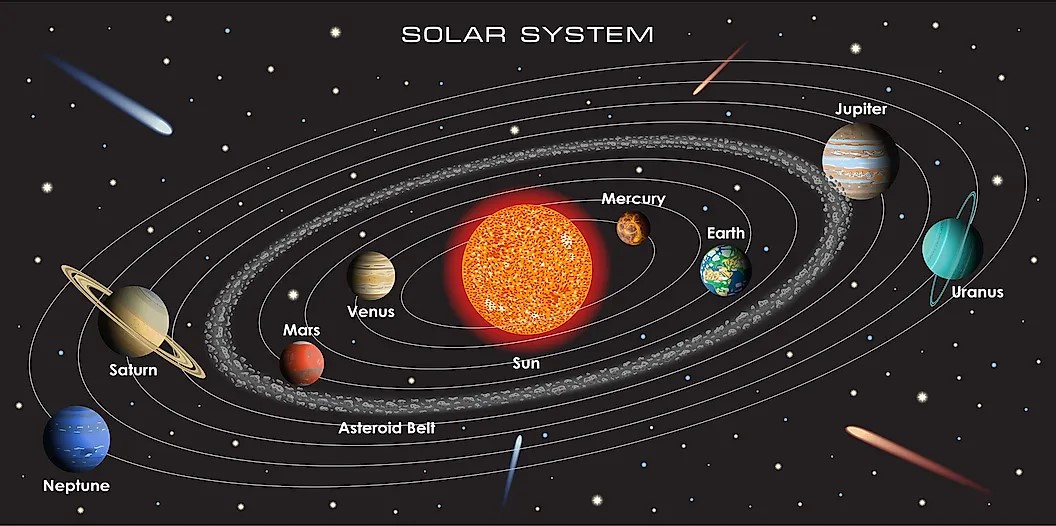
The solar system has eight planets. Moving outward from the Sun, the planets are: Mercury, Venus, Earth,
Mars, Jupiter, Saturn, Uranus, and Neptune. There are five officially recognized dwarf planets in our
solar system. In order of distance from the Sun they are: Ceres, Pluto, Haumea, Makemake, and Eris.
Planets stay never far away from sun ecliptic. Because Mercury and Venus are closer to the sun, they are
difficult to observe after sunset or before sunrise. The 5 giant planets can be observed all night long
when they are opposite the sun.
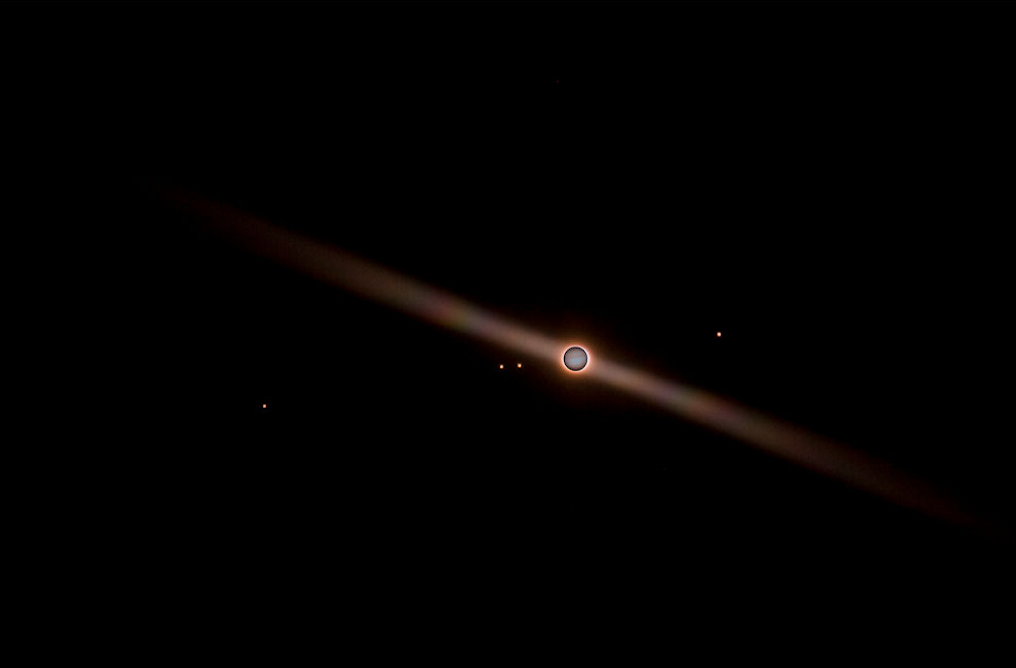
All planets beside Mercury and Venus have own moons, Jupiter even 92 which are known. I managed to image 4 of them.
|
|
Asteroids & Comets
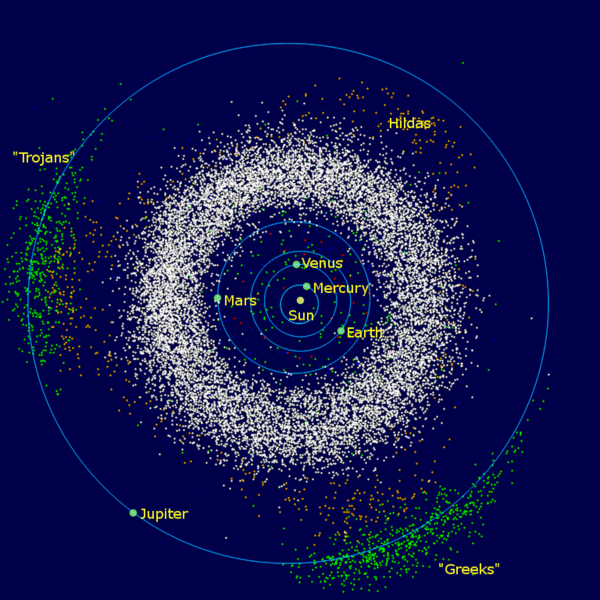
They are all planetary objects orbiting the Sun. An asteroid is a small, rocky object and when
seen in a telescope, it appears as a point of light. Most asteroids are found in a ring between the
orbit of Mars and Jupiter called the asteroid belt. In contrast to asteroids, most comets come from
beyond the orbit of Pluto, in a region of the solar system called the Oort Cloud.
Some asteroids are round, some are elongated, and some even have a satellite. A comet also orbits the Sun,
but unlike an asteroid, it is composed of ice and dust. So, when a comet gets close to the Sun, its ice
and dust content start to vaporize. So, when seen in a telescope, a comet appears fuzzy and/or has a tail.
|
|
Distances in the Universe
The distances and sizes in the universe are so big, that astronomers have invented new units to describe distance.
Astronomical Units:
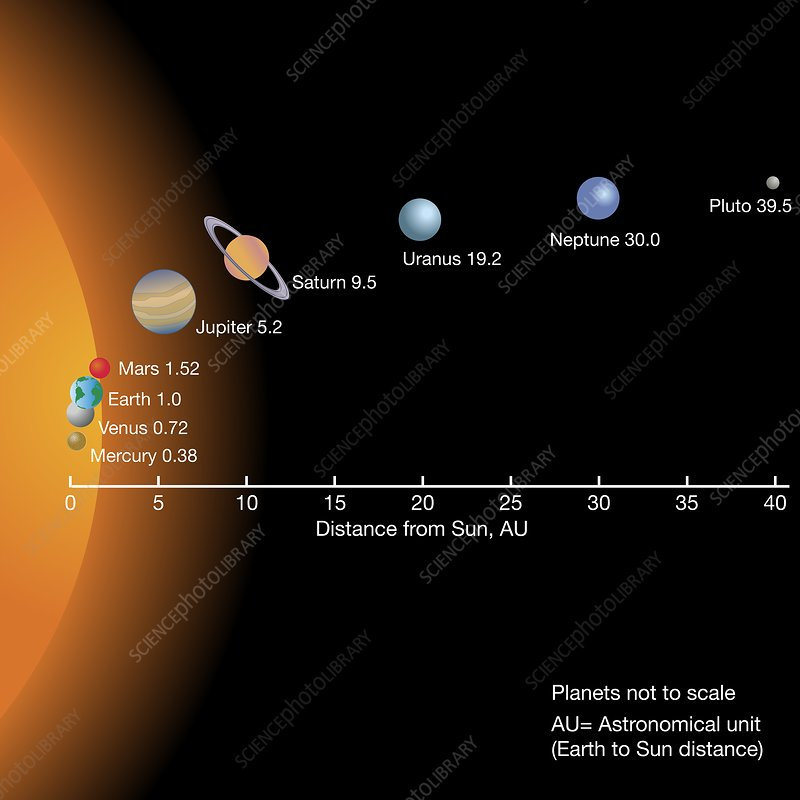
Distances in the solar system are often measured in astronomical units (abbreviated AU). An astronomical unit is the average distance between the Earth and the Sun: 1 AU = 1.496 x 10⁸ km = 93 million miles
Jupiter is about 5.2 AU from the Sun and Pluto is about 39.5 AU from the Sun. The distance from the Sun to the center of the Milky Way is approximately 1.7 x 10⁹ AU.
Light-Years:
To measure the distances between stars, astronomers often use light-years (abbreviated ly). A light-year is the distance that light travels in a vacuum in one year: 1 ly = 9.5 x 10¹² km = 63,240 AU
Proxima Centauri is the nearest star to Earth (other than the Sun) and is 4.2 light-years away. This means light from Proxima Centauri takes 4.2 years to travel to Earth.
Parsecs:
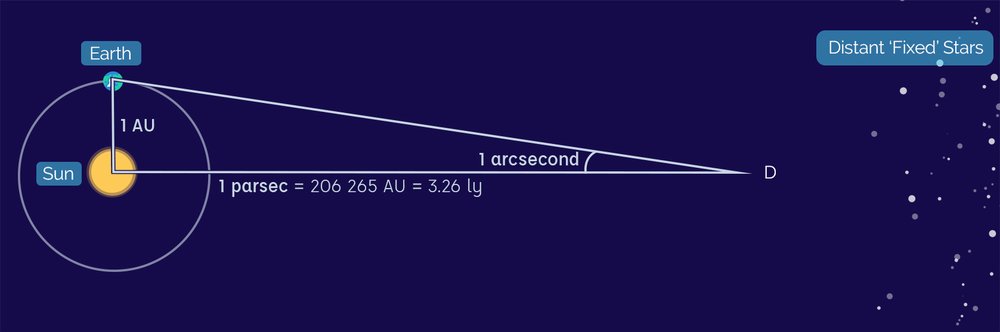
Many astronomers prefer to use parsecs (abbreviated pc) to measure distance to stars. This is because its definition is closely related to a method of measuring the distances between stars. A parsec is the distance at which 1 AU subtends an angle of 1 arcsec.
|
|
|
|
