Chapter 3.3
Equatorial Mounts
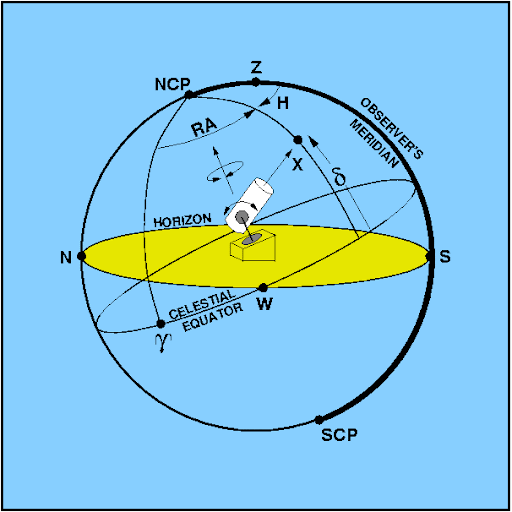
The equatorial coordinate system
An equatorial mount compensates Earth's rotation by having one rotational axis, called polar axis, parallel
to the Earth's axis of rotation. The advantage of an equatorial mount lies in its ability to allow the instrument
attached to it to stay fixed on any celestial object by driving one axis at a constant speed. Equatorial mounts
achieve this by aligning their rotational axis with the Earth, a process known as polar alignment.
|
|
Polar Alignment
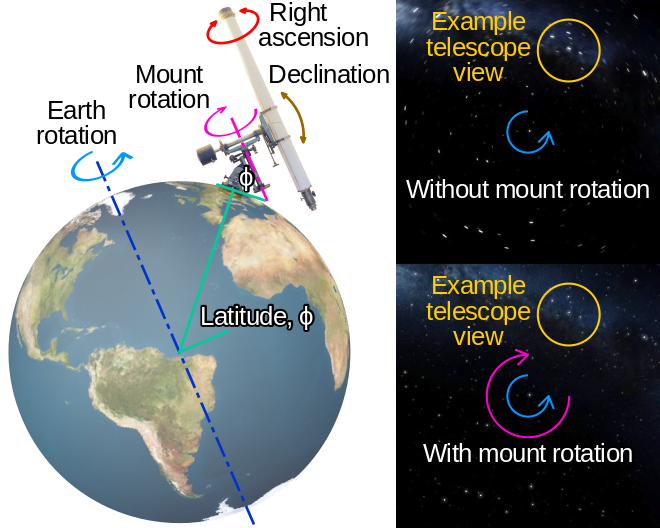
Polar alignment is the process of accurately aligning the polar axis of your mount with the north (or south)
celestial pole. In the Northern Hemisphere, sighting Polaris the North Star is the usual procedure for aligning
a telescope mount's polar axis parallel to the Earth's axis. Polaris is approximately three-quarters of a degree
from the North Celestial Pole, and is easily seen by the naked eye.
There are several types of polar alignment that one could use depending on what gear you have, whether or
not you have a clear view of a celestial pole or which equipment and software you can use. Details of polar
alignment are discussed in a separate chapter.
|
|
Mounts
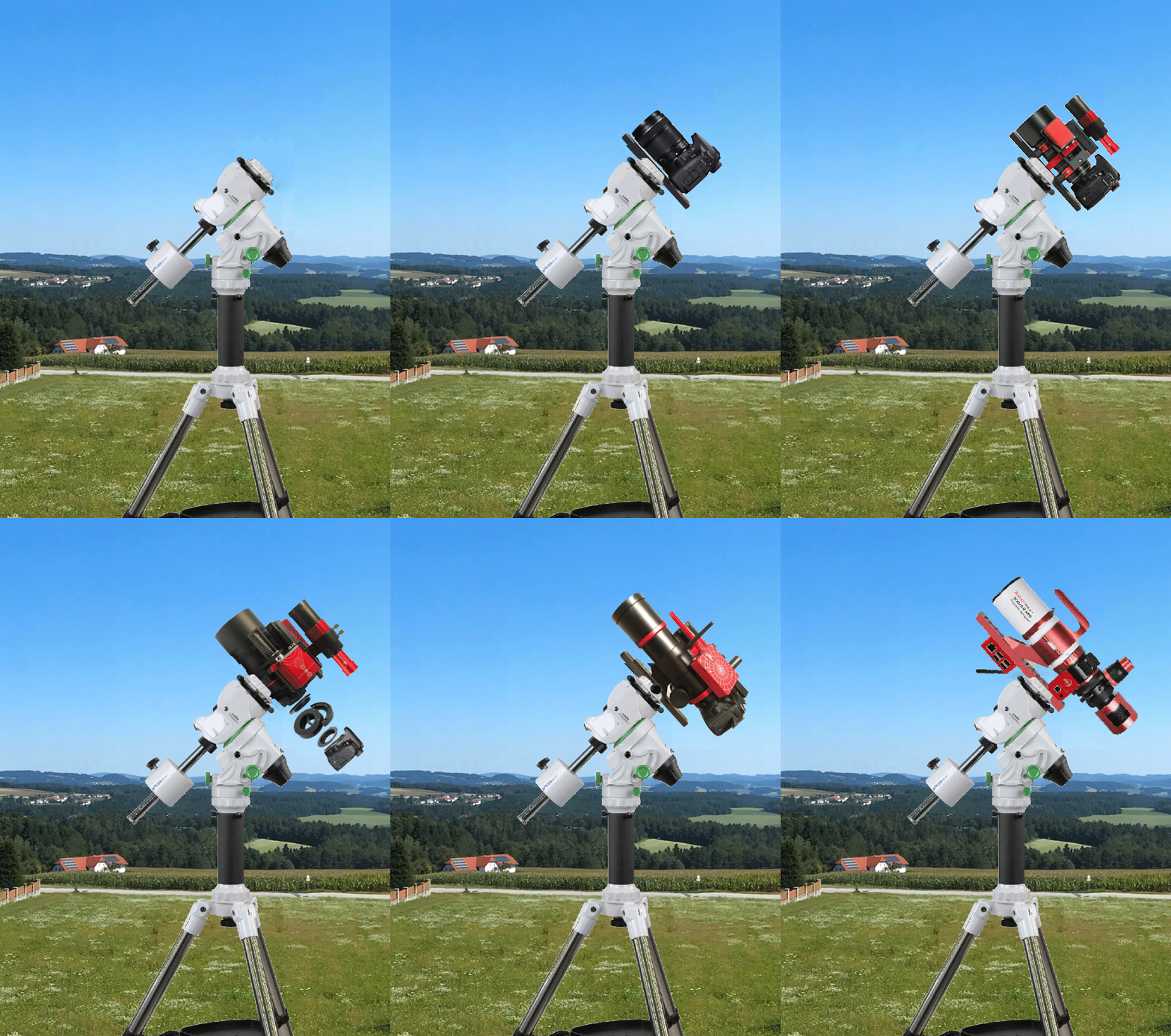
Skywatcher Star Adventurer GTii
The Star Adventurer GTi features a built-in illuminated polar scope for precision alignment, interfaces for USB,
autoguider, optional SynScan hand controller, and programmable SNAP shutter control for your DSLR.
The Star Adventurer GTi also includes a dual-position counterweight for use at low latitudes as well
as full smartphone control via Wi-Fi.
With its 11-pound payload capacity, Star Adventurer is well-equipped to handle your DLSR or mirrorless
camera sporting a wide-angle or telephoto lens plus accessories, a small aperture astrograph with a
dedicated Astro Camera, or even small OTA's such as Sky-Watcher's Skymax series of Maksutov-Cassegrain
telescopes, perfect for deep-space objects, the moon, and planets.
iOptron GEM28i
GEM28 is designed for practical handling and easy transport. The mount with a own weight of 4.5kg can handle up to 12.7 kg payload and
offers an optimally balanced weight-to-payload ratio. This ratio allows for a fairly high payload with a low
dead weight and thus ideal conditions for mobile astrophotography and observation.
Additional, very useful functions for user comfort and further developed functionality have been implemented by
iOptron with the new GEM28. A built-in WiFi system (easy to use even if you wear gloves) and a built-in Wi-Fi
that now permanently records the periodic screw fault. In terms of functionality, the GEM28 delivers precise
start-up and extremely precise tracking of the objects.
The GEM28 is equipped with the optical polar finder "AccuAlign" or with the electronic "iPolar".
|
|
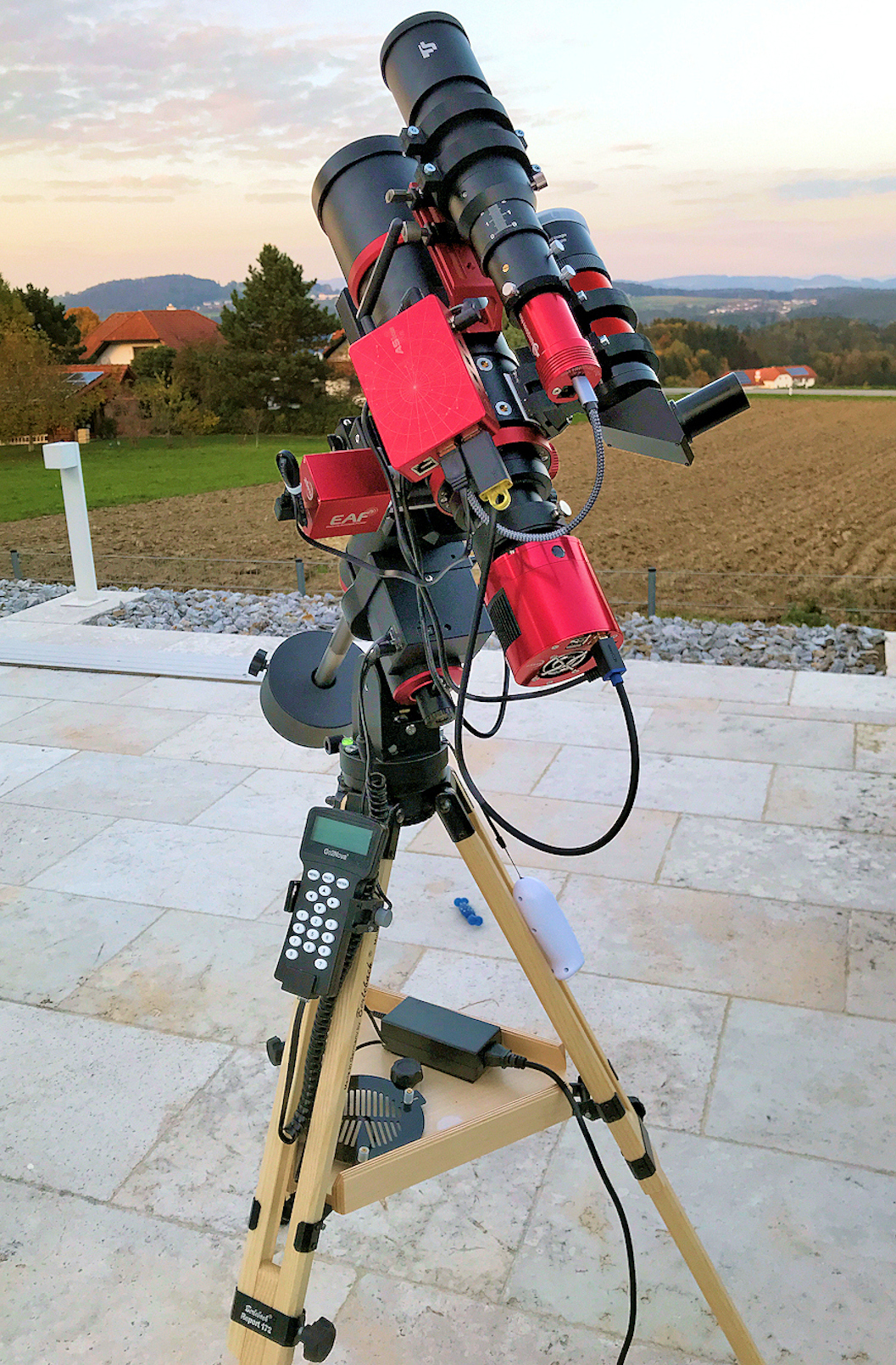
Imaging Train
Camera
Telescope
Guiding Set
Finding Scope
|
|
Accessories
Power
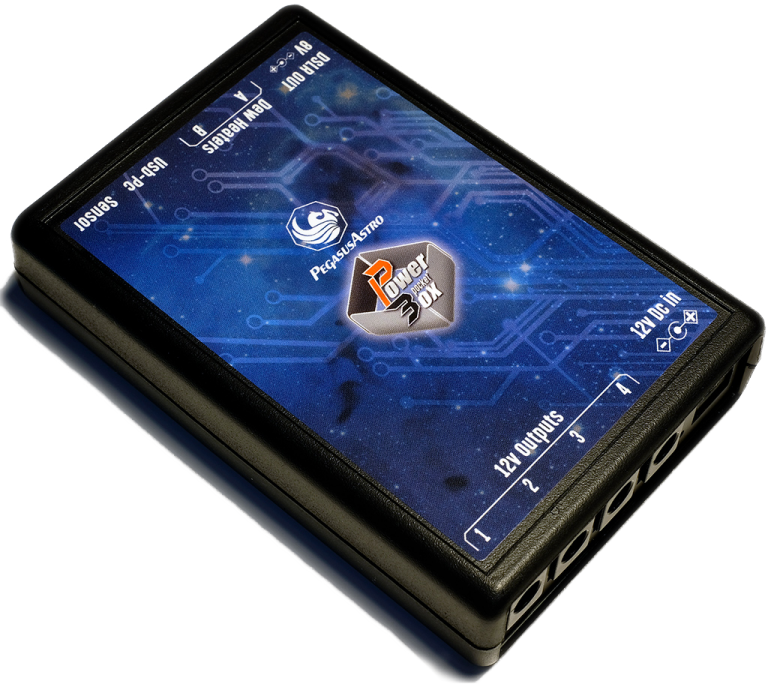
Pocket Powerbox (in short PPB) is suitable for the 'grab and go' astrophotographer who does not want too much
automation. Device can provide 10Amps of power, a sufficient number of 12V Outputs, Two Dew Heater Channels,
A DSLR power output and an environmental sensor to monitor humidity and temperature.
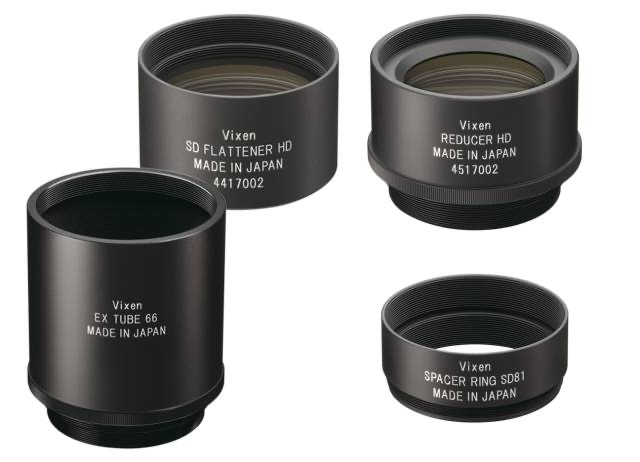
Barlow/Reducer/Flattener Correctors
Correctors improve the sharpness of the image at the edge. In addition, some systems change the focal length,
for example to obtain a higher speed or different FoV.
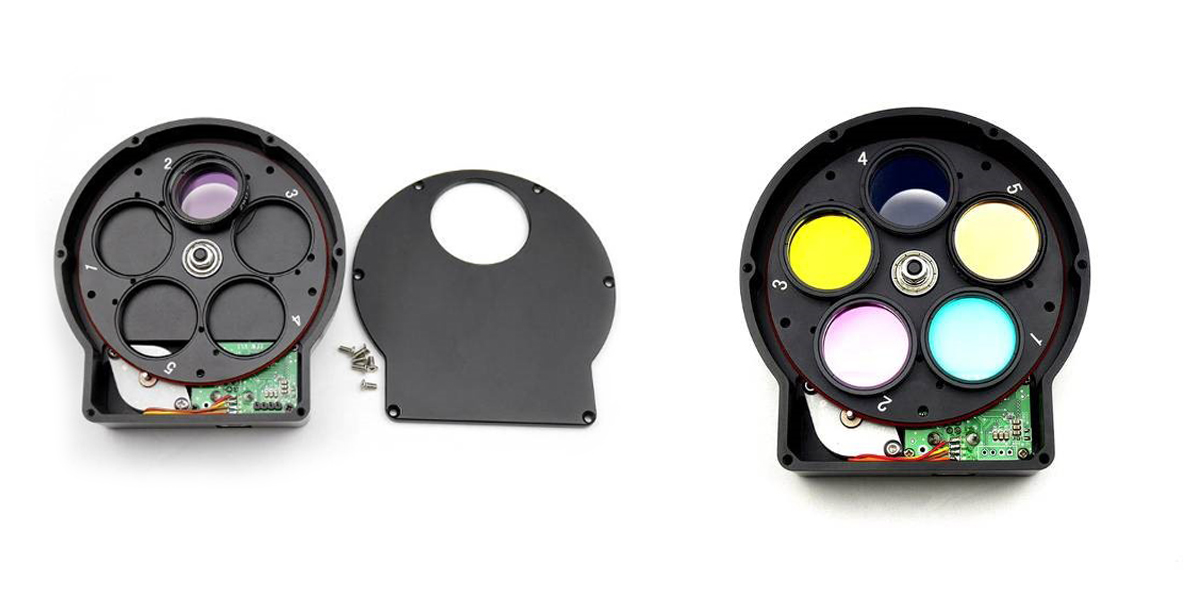
Filter
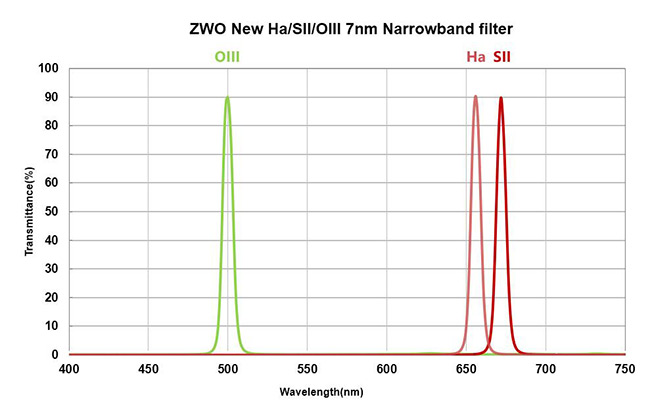
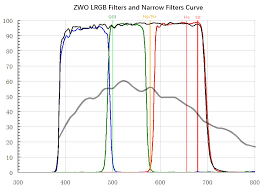
In the nebula filters category you will find both broadband and line filters. The latter only selectively
allow the light of a certain spectral line through. OIII and H alpha filters are especially popular. Many
deep sky objects will only reveal their full glory when observing using these filters!
As the name suggests, wideband and narrowband filters pass a wider range and narrower of the spectrum.
They are used primarily to suppress light pollution with monochrome cameras. For color cameras special
light pollution filters are available.
|
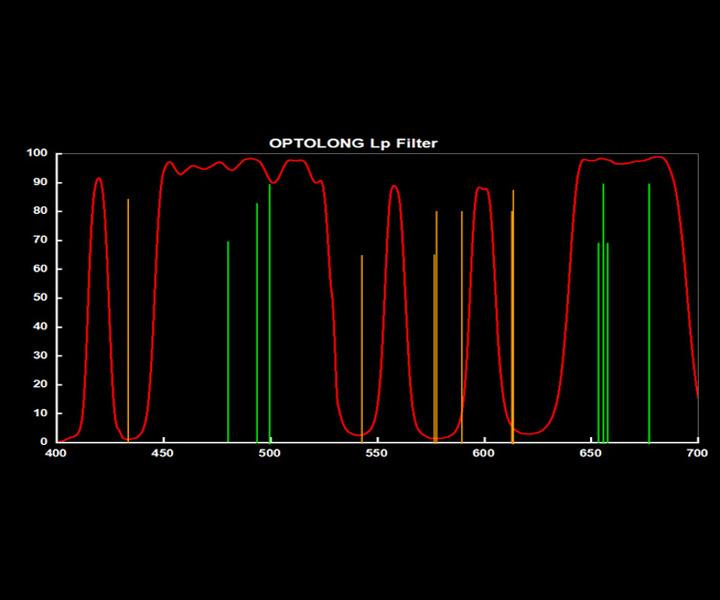
Optolong L-Pro Filter 2" Nebula Filter for Astrophotography with
improved color balance for DSLRs and One-Shot Color Astro Cameras, e.g. ASI Color Cameras cooled or uncooled by ZWO.
The L-Pro Nebula filter permits roughly 3x longer exposure times than without a filter and therefore improves
contrast significantly.
|
|
|

